

It’s a piece of cake to find articles and analyses online discussing the dramatic rise in coffee prices that began in late summer 2023.
It’s also very easy to come across numbers that go all over the place and make your head spin.
Striking…
Here are a few notable examples to give you an idea of how prices have changed.
"The consumer organization Testachats has calculated that the price of coffee has risen by 29% over the past three years."
“The price of a bag of coffee has risen by 60% over the past five years.”
"Global coffee prices rose by 39% in 2024."
"The price of Arabica rose by 58% between December 2023 and December 2024. At the same time, Robusta experienced an even more dramatic increase of about 70%. In some cases, the
rise was even more pronounced: between 2024 and 2025, prices sometimes rose by 75% for Arabica and by more than 80% for Robusta.”
"Coffee prices are set to rise sharply in 2025–2026, with increases often exceeding 30 to 50 percent for ground coffee sold in supermarkets."
"The price of coffee at the supermarket rose by 37% year-over-year in the fall of 2025."
"The price of coffee jumped 37% between August 2024 and August 2025."
“The price of Arabica coffee has risen by 66% over the past year and by 137% over the past five years, while the price of Robusta coffee has risen by 208% over the same period.”
And the latest trend, as observed this month: “An 18% increase in one year: why is coffee getting more and more expensive?”
Not everything is accurate because some figures overlap. But clearly, prices have skyrocketed—in supermarkets, coffee shops, and restaurants. Who or what is to blame?
CULPRIT 1: climate change
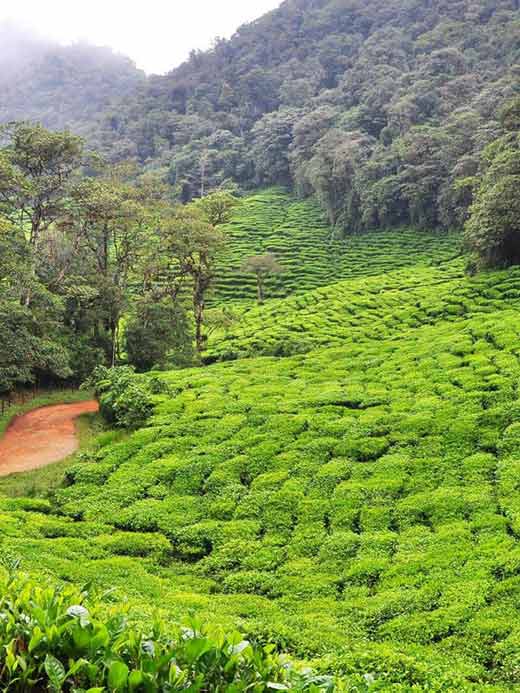
In 2024, Brazil, the world’s leading coffee producer, was hit by a severe drought. That same year, Vietnam, the world’s second-largest producer, was struck by a devastating typhoon. These are just two striking examples of extreme weather events that have significantly reduced yields. In Africa as well, and more generally in most producing countries (the coffee belt, above and below the equator), weather patterns are shifting in ways that are unfavorable for coffee cultivation. The effects are sometimes devastating, with dramatic production losses. And thus prices rise, according to the inevitable law of supply and demand.
Extreme weather events are becoming more frequent and more intense: heat waves, frosts, and heavy rains. All of this leads to a decline in both quantity and quality. And since there are fewer high-quality beans on the market, the price of specialty coffee is rising. It all comes down to supply and demand…
Due to climate change, farmers have begun to diversify their crops and no longer devote all of their arable land to coffee plants. Another observation: the average age of coffee farmers is around 60, and the low financial returns of the profession do not necessarily encourage younger generations to take up the torch. These are two other explanations for the decline in yields—and thus the surge in prices. Supply and demand, again and again…
CULPRIT 2: Rising production costs
Some farmers have chosen to invest in new farming practices that are better able to withstand climate change. It’s a good plan, but it requires new investments.
In addition, everything is becoming more and more expensive: petroleum products needed for transportation (primarily maritime), and this trend predates the current political conflicts; fertilizers; and labor. These are further factors contributing to the rise in coffee prices.
CULPRIT 3: The ever-increasing demand
Coffee is one of the most widely consumed beverages in the world. Europe and North America have traditionally been regions with high consumption rates. But in recent years, consumption has skyrocketed in other parts of the world—notably in Brazil, India, and China (where per capita consumption has quadrupled over the past fifteen years). These are, in fact, extremely populous countries. Asia as a whole has developed a taste for coffee.
More generally, there is a growing interest in specialty coffees—the high-end varieties found at Cafés Van Hove (see our blog post published on March 12).
When global production stagnates or declines while consumption rises, competition arises among buyers. This competition naturally drives prices upward.
CULPRIT 4: Speculation
Amid this relative chaos, financiers have sensed an opportunity. They speculate on prices and anticipate fluctuations. They buy in bulk before prices rise, which reduces global supply and thus drives up prices. This is pure speculation.
Other factors that have led to a decline in available stocks in recent years include political unrest in Colombia and Peru, which has disrupted (and reduced) harvests. This is significant given that Colombia is the world’s third-largest producer and Peru ranks tenth.
QED
There’s no magic solution for “Belgians’ favorite drink”: all the additional costs explained above are ultimately passed on to the consumer, right down to the cup. Coffee has reached
price levels never seen before. This often poses a dilemma for roasters and distributors. What can be done to stay the course? Reduce margins or raise prices for consumers?
What about tomorrow?
There is unanimous agreement on this: climate change is unlikely to be reversed. The process is already underway. At best, it could only be slowed down if all the necessary measures are taken at
on a global scale—which is unlikely to happen.
Studies estimate that extreme weather events are likely to continue to have a lasting impact on global agricultural production, including coffee cultivation. Scientists have concluded: “While some fluctuations cannot be ruled out, the overall trend is likely to remain one of relatively high prices in the coming years.”
Given the ever-increasing demand, producers have the opportunity to sell their coffee at a higher price. Let’s put ourselves in their shoes: why would they pass up a fair price—one they haven’t always been able to command?
Experts believe that, in the long term, climate change could profoundly transform coffee production. Some traditional coffee-growing regions may become less suitable, leading to the relocation of plantations to other parts of the world (where it is cooler, colder, or drier). Another solution is to develop coffee varieties that are more resistant to extreme heat, frost, heavy rain, and other adverse conditions.
Article written byPierre Danvoyefor Cafés Van Hove
