
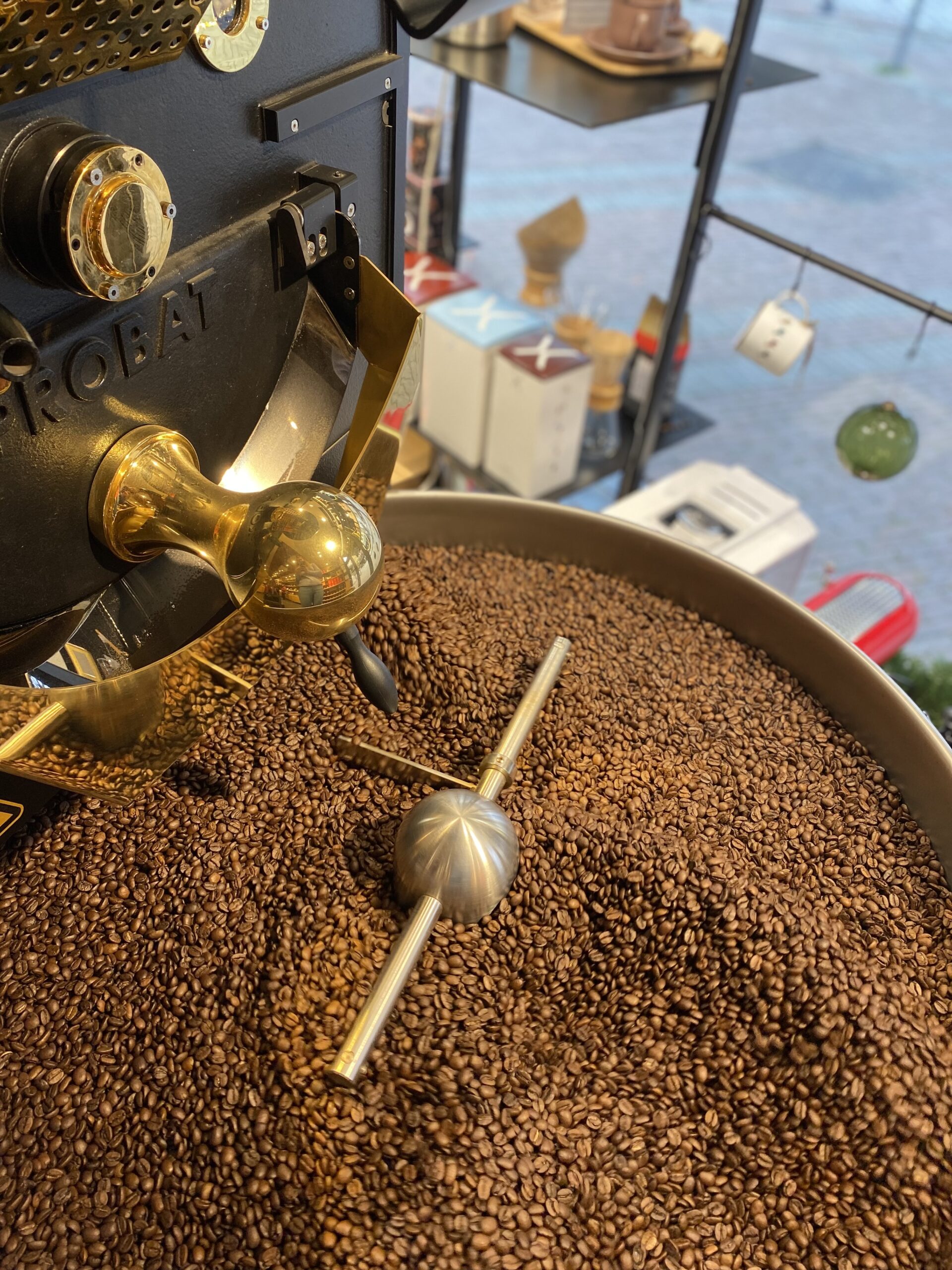

The choice is made meticulously, based on your taste preferences, at the Cafés Van Hove store in the center of Charleroi, or remotely at cafes-vanhove.be. You have opted for a coffee from Brazil, the Dominican Republic, Burundi, or Papua New Guinea. Perhaps you have chosen a blend instead. Or an organic coffee.
The beans were harvested and transported from the other side of the world to the roasting workshop in Marcinelle under the best conditions. They were then roasted with the utmost care. After all that, it's up to you to store your coffee in the best possible way, so that it retains its freshness, aromas, and "Van Hove touch" for as long as possible... Coffee is a delicate product, a capricious commodity that lives and changes, like wine, if it is not stored in the right conditions.
Discover our storage tips and mistakes to avoid here.
Best before date and use-by date: what are they?
Coffee is a non-perishable product because it is dry: it can still be consumed without any risk after its Best Before Date (BBD). It does not become unfit for consumption. Perishable products are required to display a use-by date (UBD), which must not be exceeded. Coffee is therefore exempt from this requirement. However, it will have less flavor and intensity, its bitterness will be accentuated, and it will lose some of its color if consumed after the best-before date.
Everything coffee doesn't like...
The main enemies of coffee, whether in beans or ground, are, in order of importance:
- Air oxidizes coffee very quickly, ground coffee even more so than beans because it has a larger surface area in contact with the air and grinding removes CO2, which is a natural preservative in beans. Coffee that has lost its aroma is "stale." The process is very rapid. Coffee beans, which are more resistant than ground coffee, will go stale completely within a week if left at room temperature.
- Moisture alters the aromas and oils in coffee. The process is almost instantaneous. Damp coffee is likely to become moldy.
- Temperature variations that accelerate oxidation. If it is too hot, the coffee will go rancid (become sour). If it is too cold, the aromas will be blocked.
- Light, like moisture, dissipates aromas and accelerates oxidation. There is a risk of the beans going rancid if they are exposed to light.
What should we do then?
Storing your coffee in the best conditions is actually as easy as pie. Just follow these few tips.
USE AN AIRTIGHT CONTAINER
A container protects against air, moisture, and light. A vacuum container is ideal: the air inside is extracted after each opening. This process removes oxygen from the container, slows down the oxidation of the coffee, and preserves its freshness. This container (made of metal, dark glass, or ceramic, for example) must be opaque (given the harmful effects of light on coffee) and odorless (so avoid plastic). You will notice that coffee packages are never transparent, again to avoid the effects of light. Always wash the container before adding fresh coffee.
STORE IN A COOL, DRY, AND WELL-VENTILATED PLACE
A cupboard (to keep it away from light) is ideal. Coffee should not be stored near a stove, oven, kettle, refrigerator motor, etc. Similarly, it should not be placed near a source of moisture. The best temperature is between 15 and 25 degrees Celsius.
GRIND AT THE LAST MINUTE
If you grind your own coffee, do so at the last possible moment to preserve its aromatic oils and flavor. If you grind in advance, only grind a small amount, enough for one week's consumption.
BUT ALSO…
- Clean the bean hopper of your machine regularly.
- Do not mix new coffee with older beans.
Storing coffee in the refrigerator or freezer: not un
You can read everything and its opposite on this subject in coffee literature and on specialized websites.
ARGUMENTS IN FAVOR:
- Coffee beans can be stored in the freezer for longer than their best-before date, bearing in mind that they will age more quickly once removed from the freezer due to the formation of microcracks caused by low temperatures.
- Coffee keeps well in both the refrigerator and freezer, in a metal container or a completely airtight bag (because coffee absorbs odors like a sponge).
- It is even possible to freeze ground coffee if you want to keep it for several months.
- The refrigerator is a good option in hot weather to prevent the coffee from drying out.
- When freezing coffee, the container should only be opened once the coffee has completely thawed to prevent condensation. Once the beans have reached room temperature, they can be ground as normal and the coffee can be prepared immediately. Never return beans that have already been frozen to the freezer.
- Cold temperatures slow down the oxidation of coffee.
ARGUMENTS AGAINST:
- The cold temperature of the refrigerator or freezer is too humid and alters the aromas and oils in the coffee.
- The refrigerator and freezer add moisture but also odors. These odors penetrate coffee, a porous product, and alter its taste.
- Temperature variations accelerate oxidation.
How should it be stored in an automatic machine?
Coffee machines usually have an airtight (and opaque, to prevent damage from light) lid on their bean container. However, aromas dissipate more quickly in the container than in the original packaging or an airtight box. It is useful to take this into account when choosing your machine and to estimate how often you will use it so that you don't end up with a container that is too large.
Ideally, you should only pour in the beans you need for the short term (a few days).
Article written by Pierre Danvoye for Cafés Van Hove
