
You may have noticed these statements. Perhaps they even caught your attention. On our website's home page: "ARTISANAL AND SUSTAINABLE SPECIALTY COFFEE." " Or on our bags, whether they contain whole bean or ground coffee: "HIGH-QUALITY COFFEES," "COFFEES OF EXCEPTIONAL QUALITY."
What is it?…
The term "specialty coffee" contrasts with "commodity coffee," "conventional coffee," "mass-market coffee," "industrial coffee," and "commercial coffee." To sum up very quickly
, there is craftsmanship on one side and industry on the other. The pursuit of optimal quality on the one hand, and the pursuit of profit on the other.
Cafés Van Hove has made its choice. No compromises! We exclusively offer specialty coffees.
Let's start with this question... What does coffee mean to you? Is it simply a way to get a boost (physical and mental) at the start of the day (without being too fussy about the taste)? Just an excuse to chat with colleagues in front of the machine in the middle of the afternoon (again, without high expectations)? Or the desire to enjoy a real taste experience? If you really want to enjoy yourself and tantalize your senses with every cup, the choice is clear: specialty coffee, also known as "exceptional coffee."
Specialty Coffee Association, the watchdog
The designation "specialty coffee" must be earned. These products must meet very strict standards, from cultivation to the moment the beverage flows into the cup. There is no room for "close enough." If even one box is left unchecked, the coffee will not be recognized as "specialty." And there are many boxes to check throughout the process. You will understand why specialty coffee accounts for no more than 5% of global production. The arbiter, the guardian of the designation, is the Specialty Coffee Association (SCA), an internationally certified organization. The SCA decides whether a coffee will be "specialty" or not.
It all starts with production
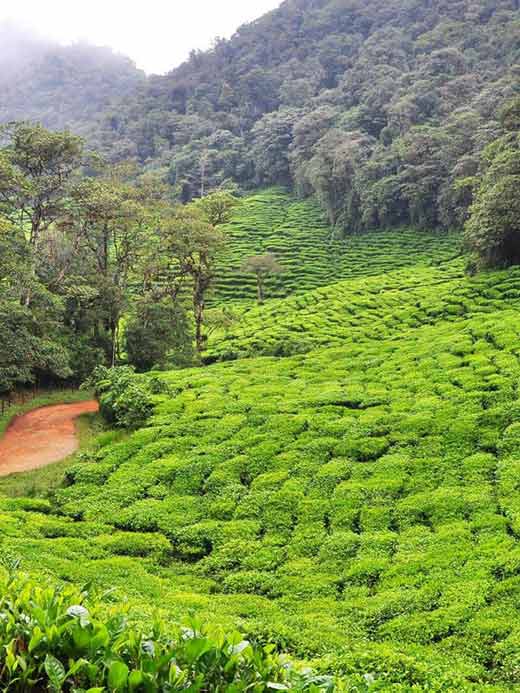
Specialty coffee is grown under the best conditions: in specific regions renowned for the quality of their beans, at high altitudes, in rich soil, with sufficient shade and a suitable climate. Cultivation methods preserve biodiversity and soil health. Traceability is important: we need to know exactly where the coffee comes from (the producer, the farm, the plot). Working conditions must be decent and coffee workers must be paid fairly. Another essential aspect is that the cherries are picked by hand, so that only perfectly ripe fruit is picked, leaving the others time to continue ripening. Mechanized harvesting is therefore prohibited. In the case of specialty coffees, pickers are not subject to harvest quotas. After this stage, workers remove the pulp residue and discard any bad beans.
Once the cherries have been washed and dried, they undergo various quality checks. Samples of 350 grams of green coffee are taken, and there are four specific requirements that must be met for
this coffee to remain in contention for the final specialty coffee designation:
- There can be no single category 1 defect (primary defect), such as black specks or pieces of wood.
- There can be no more than five category 2 defects, such as broken kernels.
- Samples must not contain any unripe kernels (quakers).
- The humidity level should be between 10 and 12%.
If even one of these requirements is not met, it is a disqualifying factor, and that's it—the coffee in question will not be recognized as a "specialty coffee."
The analysis continues during the roasting process.
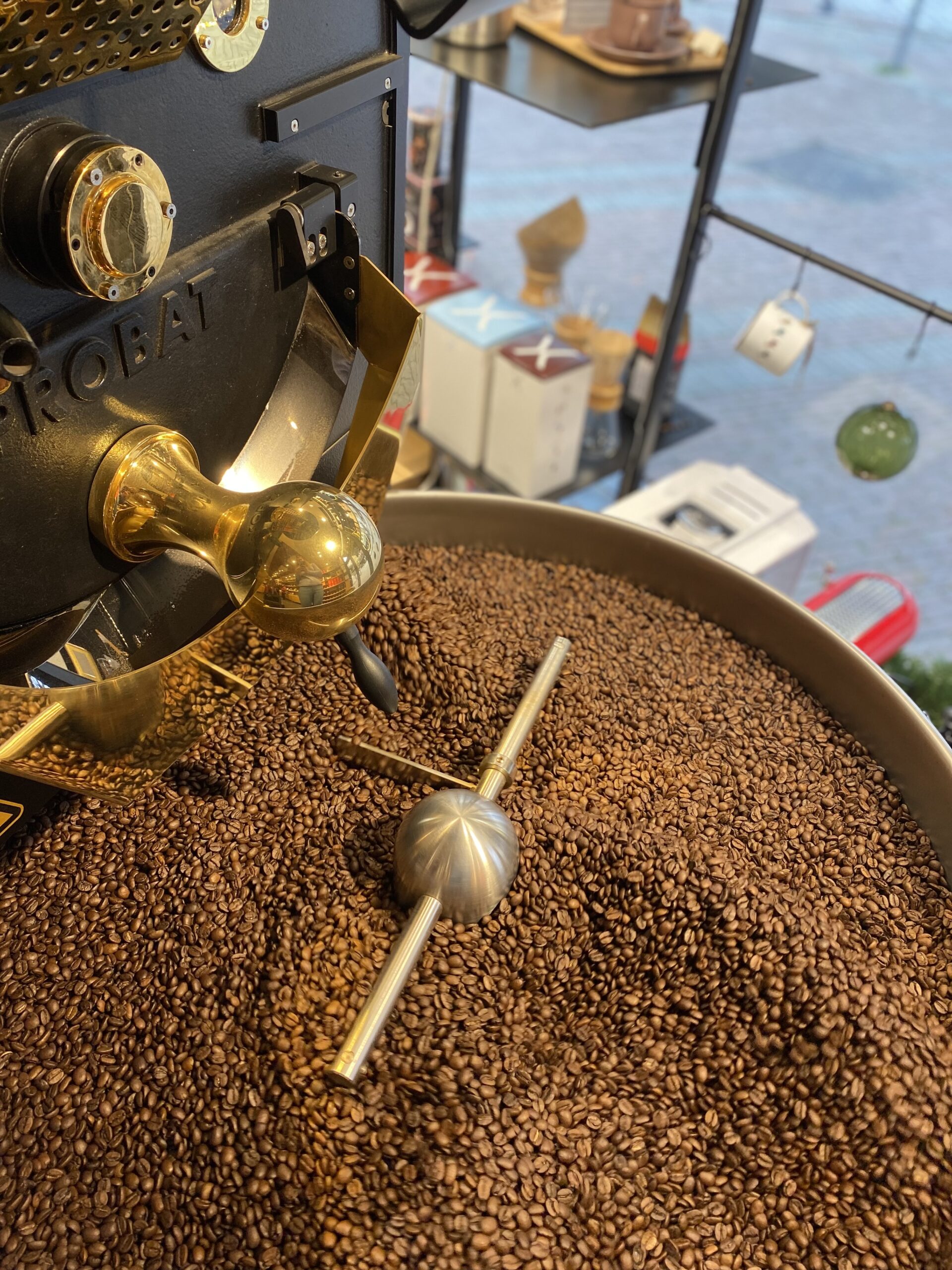
The beans that pass this "test" are then sent for roasting. This must be done by hand and tailored to the type of bean to ensure unique aromas. The beans are roasted slowly at controlled temperatures
. The process is closely monitored from start to finish to ensure that the beans are perfectly caramelized. This is a far cry from industrial roasting, which is very simple to carry out: the beans are thrown into the drum and removed when a timer rings, after a very short time of
... Even if this means they are burnt on the outside and undercooked on the inside.
The verdict is delivered during the tasting phase.
The final step on the path to recognition as a specialty coffee is the reward: tasting. This task is not entrusted to just anyone. It is delegated to certified tasters (Q-Graders) recognized by the Specialty Coffee Association. They assign a Quality Score to each coffee. This standardized tasting (cupping) follows very strict rules, as rigorous as those applied during the production and roasting stages. For each type of coffee, the same weight, the same grind, the same water temperature, and the same brewing time are used for testing.
Ten criteria are scored out of 10, and to be recognized as a specialty coffee, a coffee must score 80%.
The detailed verdicts:
- Less than 80/100: commercial coffee.
- 80 to 84.99/100: very good specialty coffee.
- 85 to 89.99 / 100: excellent specialty coffee.
- 90 to 100/100: exceptional specialty coffee.
- The 10 criteria analyzed:
- Fragrance/aroma: what is perceived by the nose.
- Flavor: impression in the mouth.
- Aftertaste: sensation that remains in the mouth after swallowing.
- Acidity.
- Body/texture: mouthfeel.
- Balance between acidity, bitterness, body, and sweetness: harmony in coffee.
- Gentleness.
- Consistency: each cup of the same coffee must be consistent.
- Cleanliness (cup).
- Overall impression of the taster.
Still hesitating?… Of course not!…
For Van Hove Coffees, this "minimum" score of 80% is therefore the norm. The concept of "specialty coffee" was only created in the 1970s, but since its inception in 1954, the company has only tolerated the best coffees in its range. "Grand cru" coffees, like the finest wines, exude aromas specific to particular terroirs, the fruit of meticulous human labor. Let's talk about your wallet to finish... Specialty coffees are generally more expensive than conventional coffees. All the reasons for these price differences are detailed in this article. But we're not talking about the same thing. An exceptional coffee is not just a "caffeine driver" that helps you stay awake. It is an experience, a moment of pleasure. Discover the most popular coffees of the moment on our website cafes-vanhove.be, whether Arabica or Robusta, whole bean or ground. Discover our machines, our subscription plans, and our office coffee offerings. Discover our "specialty..."
Article written by Pierre Danvoye for Cafés Van Hove
