


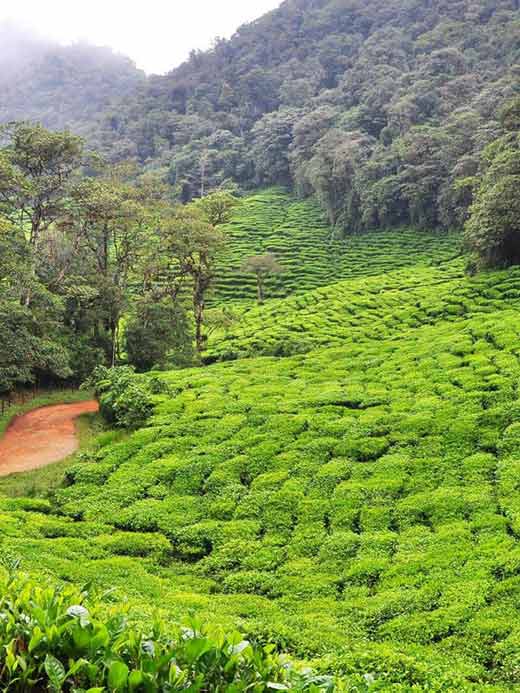
A year ago, coffee prices reached unprecedented highs. This was due to climate change (high temperatures, droughts, heavy rains, frosts). But it was also due to the poor health of plants around the world. These two factors reduced production quantities, which had an impact on prices.
Let's take a look at the most aggressive pests that damage (or even completely destroy) coffee trees and the main diseases that affect them.
PEST 1: Coffee bark beetle
The coffee bark beetle is a shiny black insect measuring 1 to 2 millimeters in length. It is the leading cause of production losses worldwide. All (equatorial) regions that grow coffee are affected, with South America being hit harder than others.
Females dig tunnels in coffee cherries and lay their eggs there. Propagation is extremely rapid: a female can lay 2 to 3 eggs per day for around 20 days. If eggs are laid in the cherry at the beginning of its development, it falls. If the eggs are laid at a later stage of development, the cherry can continue to ripen while still harboring bark beetles. The coffee can be harvested without the producer knowing that the cherries are harboring insects, but the beans will be of poorer quality.
The warmer it is, the more bark beetles reproduce. There are biological solutions for eliminating bark beetles from coffee trees, such as introducing natural predators that are harmless to the plants (birds or wasps). As with all pests and diseases, chemical treatments (which are harmful) should ideally only be considered as a last resort.
PEST 2: Root mealybug
The cochineal resembles an aphid and attacks the roots of coffee trees to drink their sap. It weakens the tree, making it less resistant to disease. Given its underground position, this insect is difficult to spot. One clear sign of its presence is colonies of ants at the base of the plants. Root scale insects drink the sap but do not digest it. They excrete a sugary substance that attracts ants.
Again, because this insect lives underground, it cannot be controlled using natural predators as is possible with bark beetles. The use of chemicals is the only effective option.
PEST 3: Coffee leaf miner
The coffee leaf miner is a small moth with long antennae. This insect is found in all regions of the world where coffee is grown. It lays its eggs on the underside of coffee leaves. Larvae develop there and damage the tissue. Brown spots appear, foliage is reduced, and the photosynthesis process is complicated. This makes the plants more susceptible to disease
and reduces cherry production.
Given that the coffee leaf miner reproduces mainly in hot weather, one solution is to adopt agroforestry practices that help control rising temperatures on plantations. However, this is not easy, and chemical control is often preferred because it is much easier to implement and more effective.
DISEASE 1: Orange rust
In general, Arabica coffee trees are more sensitive to disease and climate variations than Robusta plants. This is one of the reasons for the price difference between these two types of coffee. The higher price of Arabica is also justified by the fact that yields are lower and it is grown at higher altitudes, which is more expensive.
Orange rust is the most common and serious disease affecting coffee trees. All producing regions are affected. It is caused by a fungus that attacks the leaves of the tree and turns them orange. The leaves appear to "rust" gradually. Coffee trees only lose their leaves if the infection is mild. The branches wither (and the trees may eventually die) when the infection is severe. In all cases, yields decrease. Orange rust affects cherry production and impacts their ripening. Since not all fruits ripen at the same rate, the harvest period is extended, resulting in additional costs and delayed deliveries.
Very high temperatures and humidity are aggravating factors for this disease. The fungus is carried from crop to crop by the wind, people, animals, and agricultural machinery. There is no real natural treatment for orange rust. Only chemical fungicides are effective.
DISEASE 2: Coffee leaf rust
This disease affects plantations at high altitudes (above 700 meters). It is caused by a fungus that attacks all parts of the plants: leaves, branches, and fruit. It is exacerbated by excessive shade and high humidity. Round brown spots appear, and the plants lose many of their leaves, which hinders the photosynthesis process. Fruit production
decreases, and in the most severe cases, the trees die.
Farmers can combat coffee leaf rust by maintaining a balanced level of shade and humidity. If too many trees are affected, chemicals must be used.
DISEASE 3: Coffee berry disease
Contrary to what its name suggests, this disease is not limited to berries. A fungus attacks the berries as well as the stems and leaves. Cherries are affected and rot. In some plantations, yield losses are enormous. The development of this disease is favored by a lack of soil fertilization and a lack of moisture.
The environmentally friendly solution involves adding nutrients to the soil and adding organic matter. If this is not enough, producers must resort to chemical fertilizers.
Article written by Pierre Danvoye for Cafés Van Hove
